
About the initiative
The Data Management Campus is a collaborative initiative developed by EPFL, ETH Zurich, and Lib4RI (representing Eawag, Empa, PSI, and WSL) as part of the ETH Board Open Research Data (ORD) Programme.
The initiative brought together RDM expertise from across the ETH Domain to develop a shared portfolio of openly available learning resources on Research Data Management (RDM) and Open Research Data (ORD). Beyond the e-learning modules, the project promotes the reuse, adaptation, and sharing of Open Educational Resources (OER) across institutions and disciplines.
The learning materials are accessible through the ETH Domain Open Educational Resources for Research Data Management community on Zenodo, where they can be reused and adapted for workshops, onboarding, and other training activities. ETH Domain members are also welcome to contribute additional OER.
Help shape what comes next
The Data Management Campus continues to grow in response to community needs. If you and/or your institution are interested in developing new modules or open learning materials on RDM and ORD, contact Fabian Felder, Project Manager, to discuss your needs and opportunities for collaboration.
Identifying shared needs can help guide future development and support opportunities for additional funding.
Data Management Campus
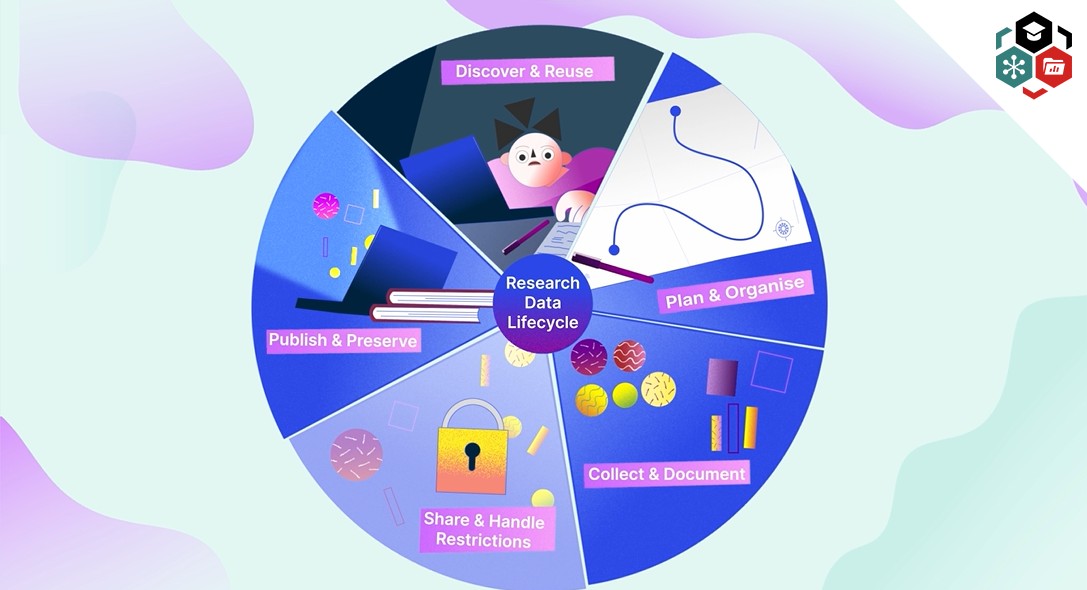
The Data Management Campus offers a set of e-learning modules covering key aspects of Reseach Data Management (RDM) and Open Research Data (ORD). The modules are designed for learners with different levels of familiarity with RDM and address different stages of the research data lifecycle.
All 10 modules are available on OpenLearnity, together with their Open Educational Resources (OER) for reuse and adaptation.
E-Learning Modules
Open Educational Resources
Filter
Topic
Institutions
Authors
Abstract
This training video explains how to document chemical synthesis so that experiments can be understood, repeated, and built upon by other researchers. Using a Suzuki coupling between an aryl bromide and a boronic acid as a running example, it shows how small details—such as reagent lot, purity, atmosphere, temperature, and reaction time—can determine whether a synthesis succeeds and whether its results can be reproduced.
The video presents practical documentation habits across the full life of a synthesis:
-
Plan before starting: State the objective and record the reaction scheme, calculated quantities, and stoichiometry.
-
Capture reagent provenance: Select chemicals from laboratory inventory where possible, preserving details such as supplier, lot number, purity, and bottle age.
-
Record every outcome: Document successful, partial, and failed experiments with the same level of detail, including conditions tested and observations made during the reaction.
-
Write observations in real time: Note what actually happens—such as colour changes, precipitates, unexpected masses, or gas evolution—rather than reconstructing an idealized account later.
-
Keep analytical data connected: Attach NMR, mass-spectrometry, and other files directly to the experiment, with clear names and brief interpretations of what the data shows.
-
Organize optimization as a campaign: Use a consistent table to compare conditions and results, making trends and promising conditions easier to identify.
-
Turn reproducible results into a procedure: Prepare a standalone recipe with exact quantities, sequence of additions, reaction conditions, work-up, purification, and practical tips.
-
Make records searchable and reusable: Use consistent templates, machine-readable reaction representations such as reaction SMILES, and open data formats such as CSV.
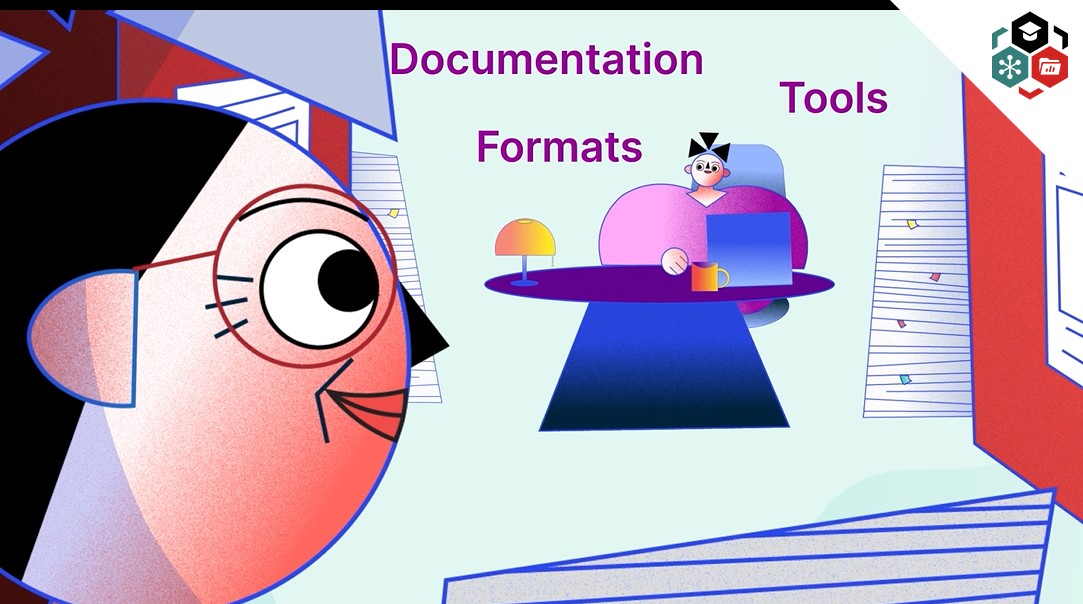
The video also compares documentation approaches—including an ELN linked to inventory, Word documents with attached files, and Markdown with version control—and emphasizes that consistent, findable records matter more than the tool alone. It concludes with a six-step checklist for planning, reagent selection, real-time recording, data attachment, optimization, and writing the final procedure. The intended audience is chemistry researchers and students seeking to improve reproducibility, preserve experimental knowledge, and make their work easier for others to continue.
-----------------
- The pictures have been generated using DeepAgent
- The voice has been provided by Elevenlabs
- The video was produced by using HeyGen
Link
Topic
Institutions
Authors
Abstract
This training video bridges the gap between theoretical Research Data Management (RDM) principles and daily laboratory practice. While the FAIR principles (Findable, Accessible, Interoperable, Reusable) outline modern data expectations, traditional paper notebooks fail to provide the searchability, automated backup, provenance, and data linkage demanded by modern science. This module introduces the core digital infrastructure designed to solve this reproducibility bottleneck: Electronic Laboratory Notebooks (ELNs) and Laboratory Information Management Systems (LIMS).
The tutorial details how an ELN captures what you did scientifically (protocols, observations, raw datasets) while a LIMS manages what you have operationally (sample genealogies, reagent lots, instrument maintenance, freezer locations). It highlights openBIS—an open-source platform developed by ETH Zurich since 2007—which natively integrates both functionalities into a single, unified, server-based environment without vendor lock-in.
Key capabilities and workflows demonstrated include:
-
Interconnected Experiment Documentation: Linking live inventory records, specific protocol versions, raw analytical files, and rich-text observations backed by an immutable, timestamped audit trail.
-
Sample & Inventory Management: Tracking hierarchical parent–child relationships (e.g., cell line passages or material batch cuts), storage metadata, equipment calibration records, and rapid sample retrieval via barcode/QR code integration.
-
Scalable, FAIR Data Infrastructure: Managing datasets from gigabytes to petabytes using BigDataLink, domain-specific metadata schemas, programmatic automation via the
pybisPython API, and Jupyter notebook workflows. -
Domain-Specific Case Studies: Practical applications across materials science (furnace heat-treatment and SEM imaging), cell biology (flow cytometry, cell line provenance, and regulatory compliance), and climate research (multi-station sensor networks and long-term time-series analysis).
-
Collaboration & Long-Term Preservation: Role-based access governance, tamper-proof version history, and direct dataset publishing to public repositories such as Zenodo with persistent DOIs.
This training resource is tailored for researchers, laboratory managers, and data stewards looking to implement robust, reproducible, and compliant scientific data workflows.
-----------------
- The pictures have been generated using DeepAgent
- The voice has been provided by Elevenlabs
- The video was produced by using HeyGen
Link
The Data Management Campus offers 10 independent e-learning modules hosted on OpenLearnity. Each module takes about 30 minutes, can be completed at your own pace, and has no grading or time limits.
The modules do not follow a required sequence: start anywhere and choose the topics most relevant to you.
Modules available:
- Data and Code Licenses
- Data Documentation and Metadata
- Data Organization and Management
- Data Publishing and Long-Term Preservation
- Data Storage, Backup and Versioning
- Open Formats and Code
- Open Research Data, Research Data Management, and FAIR
- Reproducibility and Code Management
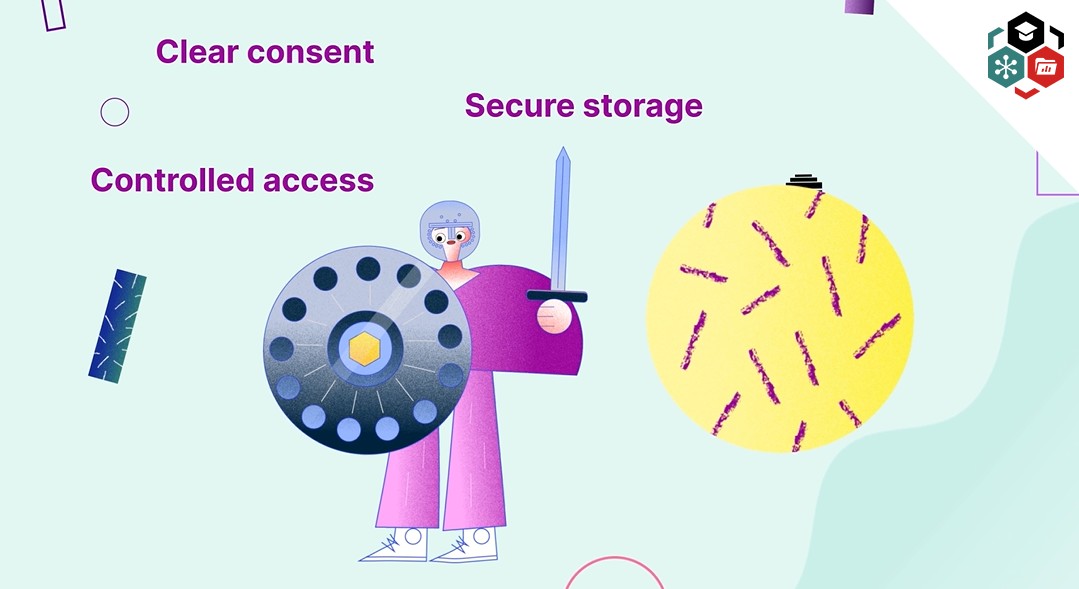
- Sensitive Data
- Writing Data Management Plans
Access: You can browse and view the modules without logging in. Logging in with a SWITCH edu-ID – also available to learners outside the ETH Domain – allows you to save your progress, resume where you left off, and access interactive activities such as exercises and quizzes.
The Data Management Campus provides a collection of Open Educational Resources (OER) through the ETH Domain Open Educational Resources for Research Data Management community on Zenodo.
The collection includes resources such as:
- Guides and tutorials
- Videos
- Exercises and quizzes
- Materials from the e-learning modules
Reuse and adapt:Â Anyone can reuse and adapt the materials for teaching, workshops, onboarding, and other training activities, within the ETH Domain and beyond.
Contribute: Researchers, trainers, and other RDM/ORD practitioners within the ETH Domain are welcome to contribute additional OER in line with the community’s curation policy.
Licensing: Materials are published under open licenses. Data Management Campus materials are typically released under CC BY 4.0; please check the license indicated on each Zenodo record.Â
Contributors and Acknowledgements
The Data Management Campus was made possible by contributions from researchers, librarians, IT services, and RDM/ORD experts across the ETH Domain.
Their expertise, feedback, and participation in testing helped shape and improve the learning resources.
Contributors and Test Users
Content development, review, and user testing – affiliation at time of contribution
- Abbas, Mohammad
, Empa
- Adamopoulou, Despina, Empa
- Allan, James
, Empa
- Ammann, Markus
, PSI
- Bosch, MartÃ
, EPFLÂ
- Bouffard, Damien
, Eawag
- Cilingir, Gözde
, WSL
- Constantin, Lionel
, Empa
- Dürr, Simon
, EPFL
- Eschmann, Quentin
, EPFL
- Feldmann, Lukas
, Empa
- Fonod, RobertÂ
, EPFL
- Franken, Robin
, EPFL
- Gabrielli, Marco
, Eawag
- Giannouli, Eleftheria
, ETH Zurich
- Granata, Valeria
, EPFL
- Hauser, Stefanie
, Empa
- Hilleke, Mattis, ETH Zurich
- Lopes, Fábio
, Empa
- Mavromatidis, Georgios
, Empa
- Milovancevic, Dragana
, EPFL
- Minotti, CarloÂ
, PSI
- Morgado, Joana F., Empa
- Nägelin, Mara, WSL
- Pal, Ranita, WSL
- Pizzi, Giovanni
PSI
- Ramirez, Rafael
, WSL
- Richter, Roland
, Empa
- Saglam, Setenay
, Empa
- Schiebroek, CarlÂ
, ETH Zurich
- Schultheiss, Marc-EdouardÂ
, EPFL
- Siegwolf, Patrick
, Empa
- Su, Pascal, Empa
- Tamburini, Federica
, ETH Zurich
- Vargas, Liliana
, ETH Zurich
- Wael, Ahmed, EPFL
- Wehrli, Stefan
, ETH Zurich
- Weil, Charlotte
, EPFL
- Wetton, Henry
, ETH Zurich
- Weymuth, Thomas
, ETH Zurich
- Wittwer, Mallory, EPFL
- Wöllhaf, Clemens, EPFL
- Wüst, Thomas
, ETH Zurich
- Zade, Omkar
, PSI
Project Team
Core team responsible for developing and delivering the initiative – affiliation at time of contribution
Affiliations reflect those at the time of contribution and may have changed since.
Last updated: October 2026


